
Measure twice: why most pantry organisers do not fit

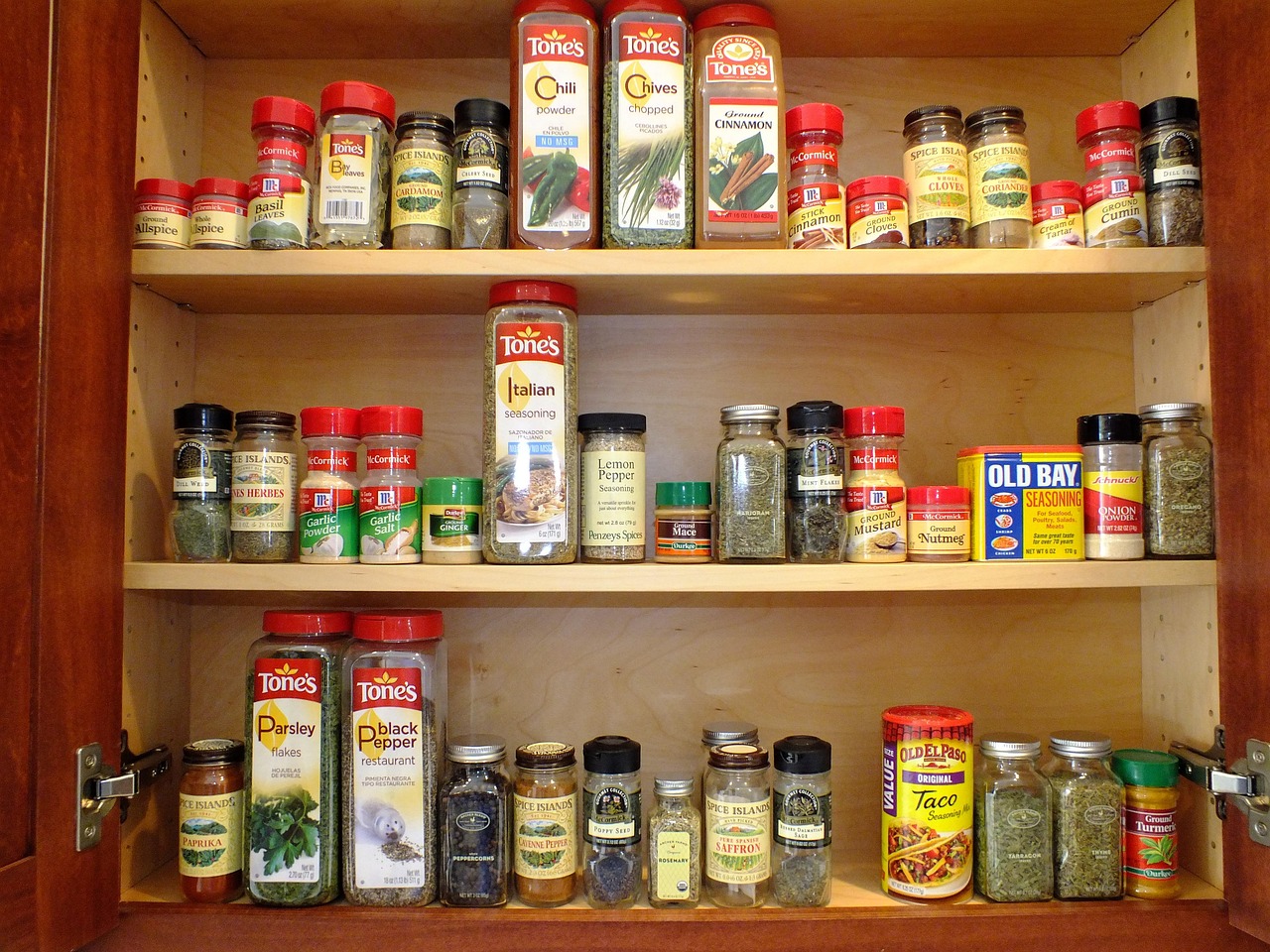
Storage organisers are returned more often than almost anything else we sell, and the reason is almost never quality. It is that a cupboard is a specific size, an organiser is a specific size, and the two were compared by eye.
Four measurements prevent nearly all of it.
The four numbers
1. Internal width at the narrowest point
Not the width of the cupboard opening — the narrowest internal point, which is usually where the hinge plate or a face frame intrudes. On a face-framed cabinet this can be an inch and a half narrower than the carcass.
2. Internal depth to the back, minus obstructions
Pipework, a plug socket at the back of a cupboard, or the door of an adjacent unit. Measure to the first thing that stops something sliding all the way in.
3. Clear height between shelves
For a tiered rack this is the binding constraint. Measure from the shelf surface to the underside of the shelf above, and remember that a tier holding tall spice jars needs the jar height plus room to lift one out.
4. Door clearance — the one everybody forgets
For a door-mounted rack: how far the rack projects, and whether the shelves inside the cupboard are set back far enough for it to close. A door rack that fouls the shelves is the single most common return in this category.
Types, and what each needs
Door-mounted racks
Excellent use of dead space, provided the projection clears the shelves. Check the fixing method too: adhesive mounts fail on textured or melamine surfaces, and screw mounts need a door thick enough to take a screw without coming through the front.
Tiered step shelves
Turn one deep shelf into three visible rows. Simple, cheap, and dependent entirely on internal height. Expanding versions adjust in width, which forgives a measurement error.
Pull-out baskets and organisers
Convert a deep base unit from a cave into something you can see the back of. These need the width, the depth and the runner mounting — most need to be screwed to the cupboard base, and some need a flat base rather than a plinth-recessed one.
Turntables
The most forgiving option, because a circle in a rectangle only needs the diameter to be smaller than the narrowest dimension. Ideal for corner cupboards and oils.
Stackable bins
Flexible, and easy to over-buy. Bins work when they are labelled and when there is a category for everything; without that they become opaque boxes that things vanish into.
The spice problem specifically
Spice jars vary enormously — from short wide 2 oz jars to tall thin 6 oz ones — and a rack sized for one shape holds the other badly. Before buying, measure the tallest jar you own and count how many jars you actually have. Most people significantly underestimate the second number.
If your collection is mixed, a drawer insert or a simple tiered shelf handles the variety better than a rack with fixed slots.
Materials
- Coated steel wire. Strong, thin, cheap. Check the coating — bare steel in a damp cupboard rusts.
- Bamboo and timber. Looks better, takes more room, dislikes moisture. Good in a dry pantry, poor under a sink.
- Plastic. Wipes clean, tolerates spills, and the cheap ones flex under weight. Look for a stated load rating.
- Acrylic. Clear, so you can see contents. Scratches, and it cracks if a heavy jar is dropped in.
A sequence that works
- Empty the cupboard completely. You will find things to throw away, which changes how much storage you need.
- Group what remains into categories, and count each group.
- Measure the four numbers above.
- Only then look at organisers, and buy for the categories you counted rather than for the cupboard.
Buying storage before sorting is how a cupboard ends up with organisers in it and no more usable space than before.
What our listings carry
Every organiser we stock states its external dimensions, and for adjustable items the minimum and maximum. Where something needs fixing to a surface, the listing says how. If a measurement you need is missing, the Santee counter can take it off the carton.
Common questions
Why do door racks so often not fit?
Because the projection of the rack fouls the shelves inside the cupboard when the door closes. Measure how far the rack sticks out and how far back the shelves are set before ordering.
Are adhesive-mounted organisers reliable?
On smooth, clean, cool surfaces, reasonably. On textured melamine, in a warm kitchen, or holding any real weight, they fail — usually at night. Screw-fixed is the safer choice for anything heavy.
Should I buy storage before or after sorting?
After, always. Sorting usually removes a third of what is in a cupboard, which changes how much storage you need and what shape it should be.
Browse the range: all products · about Goldsmith Appliance · ask us a question.